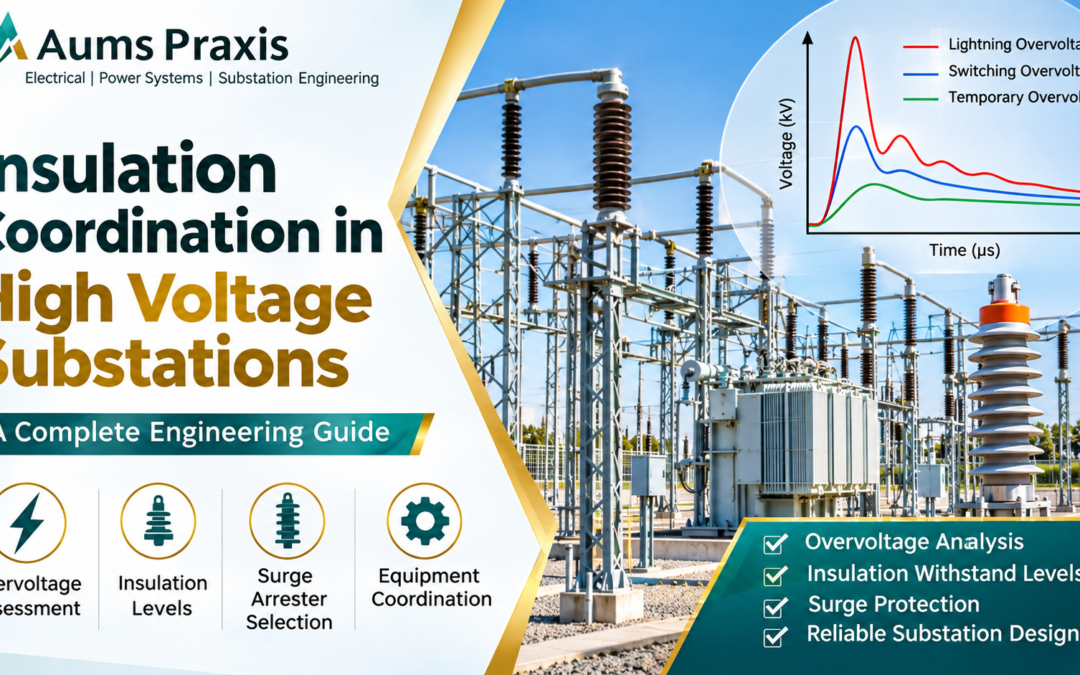
Insulation Coordination in High Voltage Substations is an essential part of high-voltage electrical engineering. It helps engineers evaluate overvoltages, select suitable surge arresters and determine appropriate insulation levels for substation equipment. As a result, this process supports reliable equipment protection and coordinated substation design.
High-voltage substations contain transformers, circuit breakers, busbars, instrument transformers, disconnectors and other equipment. Each component must withstand the electrical stresses expected during its service life. Therefore, engineers evaluate system conditions, equipment withstand capabilities and protective-device characteristics before making final design decisions.
In addition, surge arresters help limit certain overvoltages and protect connected equipment when engineers select and install them correctly. The overall design must consider the electrical network, equipment ratings, installation arrangement and applicable engineering standards.
Furthermore, engineers normally consider insulation coordination alongside wider Power System Studies, substation engineering and equipment specification activities. This integrated approach helps maintain consistency across the electrical design.
Table of Contents
- What Is Insulation Coordination?
- Why Insulation Coordination in High Voltage Substations Is Important
- Types of Overvoltages
- Equipment Insulation Levels and Withstand Ratings
- Surge Arrester Selection and Protection
- Insulation Coordination Design Process
- Key Engineering Design Considerations
- Applicable Standards and References
- Common Design Mistakes
- Substation Applications
- Frequently Asked Questions
- Related Engineering Services
- Conclusion
What Is Insulation Coordination in High Voltage Substations?
Insulation coordination is the process of selecting electrical insulation characteristics in relation to expected overvoltages and protective-device performance. Its purpose is to balance equipment withstand capability with the protection that surge arresters and other protective arrangements provide.
For example, a transformer connected to a high-voltage busbar needs insulation suitable for the electrical stresses expected at its terminals. Engineers assess the relevant system overvoltages, the transformer's insulation withstand ratings and the protective level of nearby surge arresters.
Similarly, engineers must consider the insulation requirements of circuit breakers, instrument transformers, disconnectors and other substation equipment as part of the overall design. Consequently, they should evaluate the complete installation rather than selecting insulation ratings in isolation.
Primary Objectives of Insulation Coordination in High Voltage Substationsn
- Identify overvoltages that may affect substation equipment.
- Select appropriate equipment insulation withstand levels.
- Evaluate surge arrester protective characteristics.
- Consider the electrical distance between protective devices and equipment.
- Review insulation requirements across connected equipment.
- Support reliable and technically consistent substation design.
Why Insulation Coordination in High Voltage Substations Is Important
High-voltage equipment faces electrical stresses that may exceed normal operating voltage. These stresses can originate from lightning, switching operations, earth faults and other network conditions.
Without suitable insulation coordination, equipment may experience dielectric stress beyond its specified withstand capability. Consequently, this can increase the risk of insulation failure, equipment damage and unplanned outages.
Moreover, a coordinated design helps engineers review equipment ratings and protective-device characteristics together. This makes it easier to identify potential design gaps before procurement and installation.
Key Benefits of Insulation Coordination
- Equipment protection: helps engineers select insulation suitable for expected electrical stresses.
- Surge protection: supports the selection and application of suitable surge arresters.
- Design consistency: helps coordinate insulation requirements across connected equipment.
- Reliability: reduces the likelihood of insulation-related failures when engineers apply the design correctly.
- Engineering assurance: provides a documented basis for equipment specification and design review.
Types of Overvoltages in High Voltage Substations
Overvoltage assessment provides a key input to insulation coordination. Engineers identify the sources, characteristics and expected severity of overvoltages before selecting suitable insulation and protective arrangements.
1. Lightning Overvoltages
Lightning overvoltages may enter a substation through overhead transmission lines or arise from lightning strikes in the surrounding area. They can produce steep-front voltage surges that place significant stress on equipment insulation.
To manage these electrical stresses, engineers commonly consider surge arresters and suitable shielding arrangements. Furthermore, they must consider the location and characteristics of incoming transmission lines when evaluating lightning exposure.
2. Switching Overvoltages
Switching operations such as energising or de-energising transmission lines, transformers and other equipment may create transient overvoltages. Their characteristics depend on the network configuration and switching conditions.
Moreover, network configuration can influence the magnitude and duration of switching overvoltages. Therefore, engineers assess switching conditions when designing and specifying equipment for higher-voltage systems.
3. Temporary Overvoltages
Temporary overvoltages are power-frequency overvoltages that may persist longer than transient surges. They can occur due to earth faults, load rejection, resonance or other system conditions.
Unlike short-duration lightning impulses, temporary overvoltages require engineers to consider both voltage magnitude and duration when evaluating equipment and surge arrester performance. Therefore, engineers should evaluate both voltage magnitude and exposure duration.
Insulation Coordination in High Voltage Substations: Equipment Insulation Levels
Equipment insulation levels define the specified voltage withstand capability of electrical equipment under particular test conditions. These ratings help engineers evaluate whether equipment suits its intended application.
For high-voltage equipment, the selection process considers the highest voltage for equipment, required withstand levels and applicable insulation coordination principles. In addition, manufacturer data helps confirm the suitability of selected equipment.
Common Insulation Withstand Considerations
| Insulation consideration | Purpose | Engineering application |
|---|---|---|
| Power-frequency withstand voltage | Assesses insulation performance under specified power-frequency test conditions. | Equipment dielectric specification and testing. |
| Lightning impulse withstand voltage | Assesses insulation performance against specified lightning impulse test voltages. | High-voltage equipment insulation selection. |
| Switching impulse withstand voltage | Assesses insulation performance under specified switching impulse conditions where applicable. | Higher-voltage system equipment design. |
| External insulation | Considers insulation exposed to environmental and atmospheric conditions. | Insulators, bushings and outdoor equipment. |
| Internal insulation | Considers insulation within equipment enclosures or insulating systems. | Transformers, instrument transformers and switchgear. |
However, the required withstand ratings depend on equipment voltage class, insulation design and applicable standards. Engineers should use manufacturer-declared ratings and approved project criteria. As a result, equipment selection remains consistent with the approved design basis.
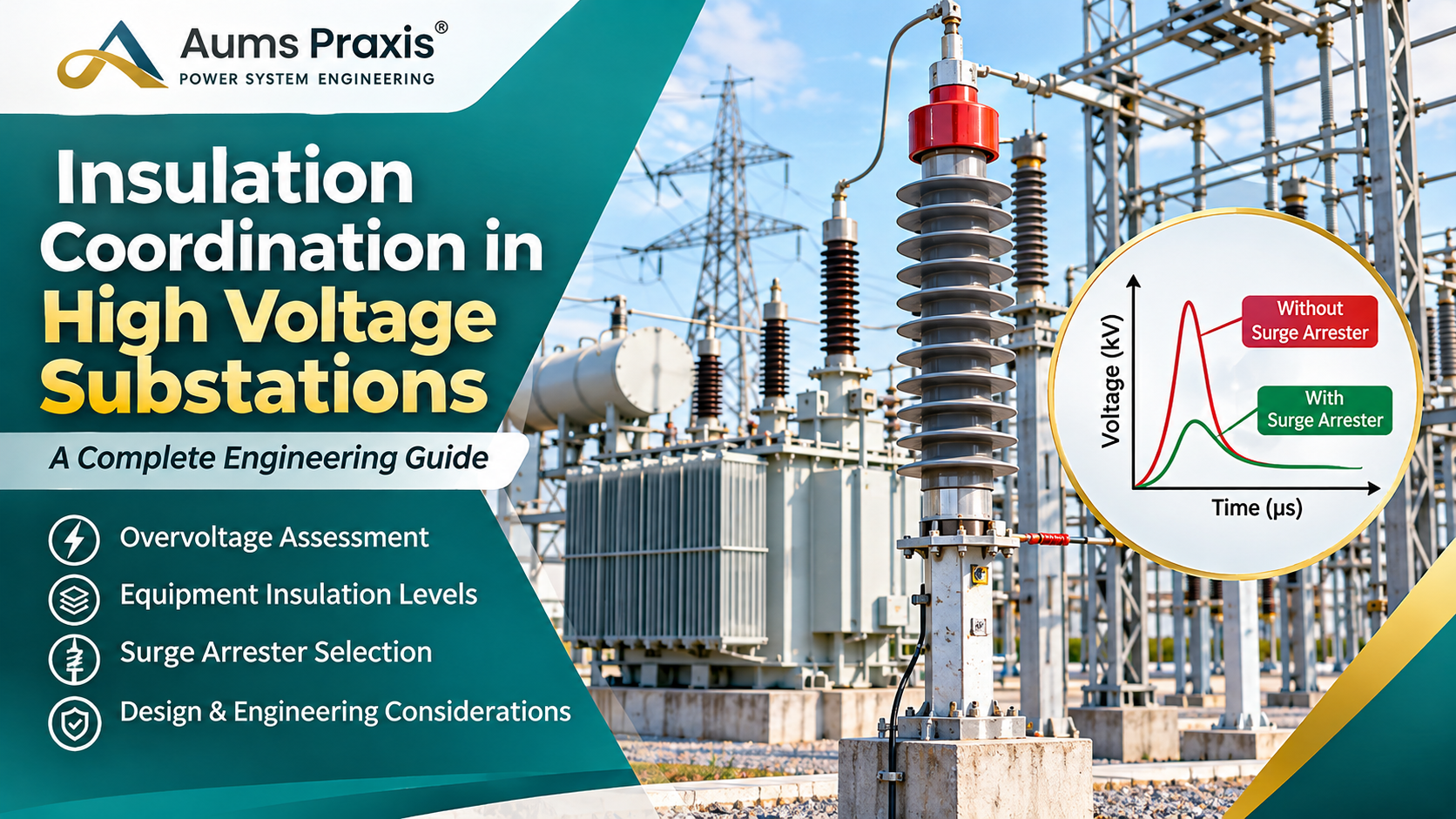 alt="Insulation coordination in high voltage substations showing surge arrester protection and overvoltage assessment"
title="Insulation Coordination Guide for High Voltage Substations"
loading="lazy"
style="width:100%; height:auto; border-radius:12px;" />
High-voltage substation equipment and key insulation coordination considerations.
Surge Arrester Selection and Protection in High Voltage Substations
Surge arresters are important protective devices that limit overvoltages and help protect electrical equipment. Engineers generally connect them between line and earth, or use another arrangement specified by the system design.
When an overvoltage occurs, the arrester conducts surge current and limits the voltage appearing across protected equipment according to its specified protective characteristics.
Important Surge Arrester Selection Parameters
- Continuous operating voltage: the voltage that the arrester can withstand continuously under specified conditions.
- Rated voltage: the arrester rating used in accordance with its specified operating requirements.
- Temporary overvoltage capability: the arrester's ability to withstand temporary overvoltage conditions for defined durations.
- Residual voltage: the voltage appearing across the arrester during the specified discharge current.
- Energy and charge capability: relevant capability parameters for the expected surge duty.
- Installation location: the physical location and connection arrangement in relation to the protected equipment.
In addition, connecting lead length, conductor arrangement and the separation between the arrester and protected equipment can influence the protective level at equipment terminals. As a result, correct arrester placement becomes an important part of the protection design.
Insulation Coordination Between Surge Arresters and Equipment
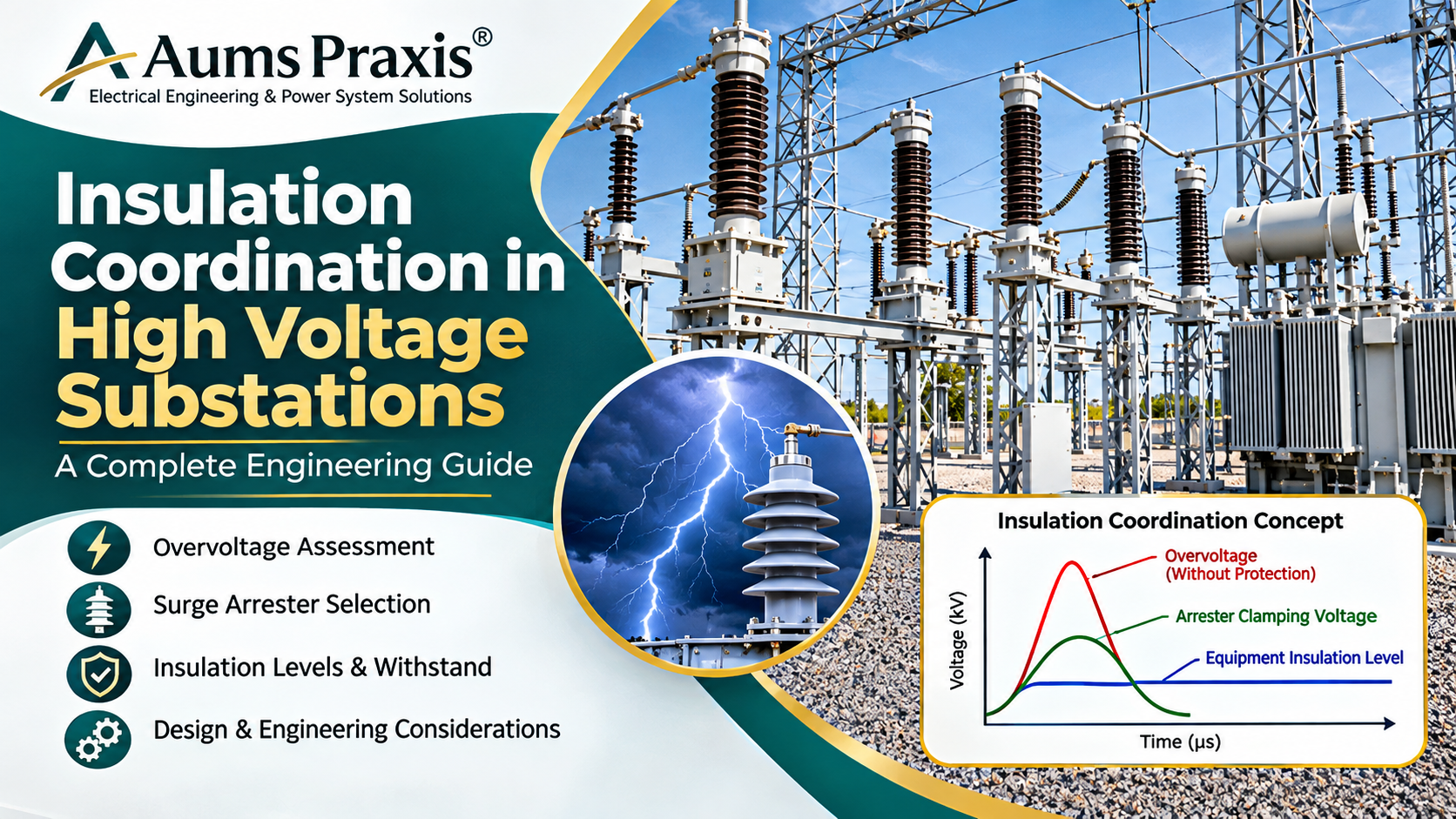
Engineers must evaluate the protective characteristics of the surge arrester together with the insulation withstand capability of the equipment. They assess the protective margin using the applicable design method, relevant system conditions and installation effects.
Therefore, engineers should not select an arrester only by matching its nominal voltage to the equipment voltage. They must also check continuous operating voltage, temporary overvoltage capability, discharge characteristics and application requirements.
 alt="Surge arrester protection concept comparing overvoltage and equipment insulation level in a high voltage substation"
title="Surge Arrester Protection and Insulation Coordination Concept"
loading="lazy"
style="width:100%; height:auto; border-radius:12px;" />
Conceptual illustration of surge arrester protection and insulation coordination.
Insulation Coordination in High Voltage Substations: Design Process
A structured engineering process helps ensure that insulation coordination reflects verified system information and suitable equipment data. The exact scope depends on project voltage level, network configuration and design requirements.
Step-by-Step Engineering Approach
- Collect system information: review the Single Line Diagram, system voltage, equipment data and network configuration.
- Identify overvoltage sources: assess relevant lightning, switching and temporary overvoltage conditions.
- Review equipment ratings: collect insulation withstand ratings and manufacturer information for specified equipment.
- Assess surge protection: review surge arrester characteristics and proposed installation locations.
- Evaluate protective coordination: compare arrester protective characteristics with equipment withstand requirements.
- Review installation arrangements: consider lead lengths, clearances, connections and equipment positioning.
- Verify applicable standards: check the design basis against relevant IEC standards and project specifications.
- Document engineering results: record assumptions, equipment ratings, selection criteria and recommendations.
Where required, the design may also include detailed transient studies or specialist simulations. Engineers should select these analyses according to project scope and network complexity. Consequently, accurate input data improves the quality of the engineering assessment.
Key Engineering Design Considerations for Insulation Coordination
Several technical and installation factors influence insulation coordination in high-voltage substations. In practice, engineers should review these factors together rather than treating equipment ratings as isolated values.
1. System Voltage and Network Configuration
The highest voltage for equipment and the operating configuration form an important basis for insulation selection. Transformer connections, grounding arrangements and system operating conditions may also affect the overvoltage assessment.
2. Environmental Conditions
Outdoor insulation can face altitude, pollution, humidity, temperature and other site conditions. Consequently, engineers should reflect the actual installation environment when selecting external insulation and equipment. For example, higher altitude can affect external insulation requirements.
3. Equipment Installation and Clearances
Physical arrangement, conductor spacing, electrical clearances and surge arrester connection lengths can influence the overall installation. Therefore, engineers should coordinate these aspects with the substation layout and equipment design.
4. Manufacturer Data and Testing
Engineers should check equipment specifications against manufacturer-declared insulation ratings and applicable type-test or routine-test requirements. In addition, they should review and document any deviations before approval.
5. Coordination With Other Engineering Studies
Insulation coordination should align with relevant power system studies, equipment specifications, earthing design and substation engineering deliverables. This approach helps maintain consistency between electrical calculations and the final installation design.
Applicable Standards and Engineering References
International standards provide a framework for insulation coordination, equipment withstand ratings and surge arrester application. Engineers should confirm the applicable editions and project requirements before finalising the design.
- IEC 60071-1: Insulation coordination – Part 1: Definitions, principles and rules.
- IEC 60071-2: Insulation coordination – Part 2: Application guidelines.
- IEC 60099-4: Surge arresters – Metal-oxide surge arresters without gaps for AC systems.
- IEC 60060-1: High-voltage test techniques – General definitions and test requirements.
For official scope and publication information, refer to the IEC 60071-1:2019 standard.
Furthermore, engineers should read these references together with relevant equipment standards, manufacturer documentation and project specifications. The correct standard and edition depend on the application and project requirements.
Common Insulation Coordination Design Mistakes
Insulation coordination problems can arise when engineers overlook system conditions, equipment data or installation details. Therefore, a proper engineering review should identify potential gaps before equipment procurement and project execution.
Common Issues to Avoid
- Selecting surge arresters without checking temporary overvoltage capability.
- Ignoring the distance between surge arresters and protected equipment.
- Using incomplete or outdated equipment insulation data.
- Overlooking site altitude and environmental conditions.
- Assuming all equipment in a substation has identical insulation requirements.
- Ignoring relevant switching and lightning overvoltage conditions.
- Using generic equipment ratings without project-specific verification.
- Failing to coordinate electrical design with physical substation layout.
Applications of Insulation Coordination in Substation Projects
Insulation coordination is relevant to a wide range of high-voltage electrical installations. Its application depends on equipment, voltage class, network configuration and project requirements.
- Transmission and distribution substations.
- High-voltage and extra-high-voltage switchyards.
- Power transformer installations.
- Industrial substations and captive power systems.
- Renewable energy evacuation substations.
- Utility grid interconnection projects.
- Substation expansion and equipment replacement projects.
For new installations, insulation coordination supports equipment specification and design development. Similarly, engineers may need to review existing substations when system voltage, equipment configuration or network operating conditions change. In either case, a project-specific assessment helps maintain suitable protection arrangements.
Frequently Asked Questions
1. What is insulation coordination in a substation?
Insulation coordination is the process of selecting equipment insulation withstand levels in relation to expected overvoltages and protective-device characteristics.
2. Why are surge arresters used in high-voltage substations?
Surge arresters help limit overvoltages and protect connected equipment when engineers select and apply them according to system conditions and equipment requirements.
3. What are the main types of overvoltages?
The main categories considered in insulation coordination include lightning overvoltages, switching overvoltages and temporary overvoltages.
4. Which standard covers insulation coordination?
IEC 60071-1 covers definitions, principles and rules for insulation coordination. IEC 60071-2 provides application guidelines.
5. What information is required for insulation coordination?
Typical inputs include system voltage, network configuration, overvoltage information, equipment withstand ratings, surge arrester data and installation details.
6. Is insulation coordination required for substation expansion?
Engineers should review it when changes to equipment, system configuration or operating conditions may affect insulation requirements or surge protection arrangements.
Related Engineering Services
Insulation coordination forms one part of a coordinated electrical engineering design. In addition, explore related Aums Praxis services and resources:
Conclusion
Insulation Coordination in High Voltage Substations is an important engineering activity that supports the selection of suitable insulation levels and surge protection arrangements. By assessing lightning, switching and temporary overvoltages, engineers can evaluate the relationship between equipment withstand capability and protective-device performance.
Furthermore, reliable design requires accurate system information, verified equipment data, appropriate standards and careful consideration of installation conditions. Surge arrester selection, equipment insulation ratings and substation layout should therefore work together as connected engineering requirements.
Whether a project involves a new substation, an expansion or an existing installation, a structured insulation coordination assessment supports technically consistent equipment specification and dependable electrical system design.
Need High Voltage Substation Engineering Support?
Aums Praxis provides electrical engineering design and consultancy support for industrial and infrastructure projects, including power system studies, substation engineering and electrical design services.
Contact Our Engineering Team